Electricity powers almost every aspect of modern life. From lighting and appliances in homes to machinery and equipment in businesses, a reliable electrical system is essential. However, without proper protection, electrical faults can cause equipment damage, power outages, fires, and even serious injuries.
One of the most important safety components in any electrical installation is the circuit breaker.
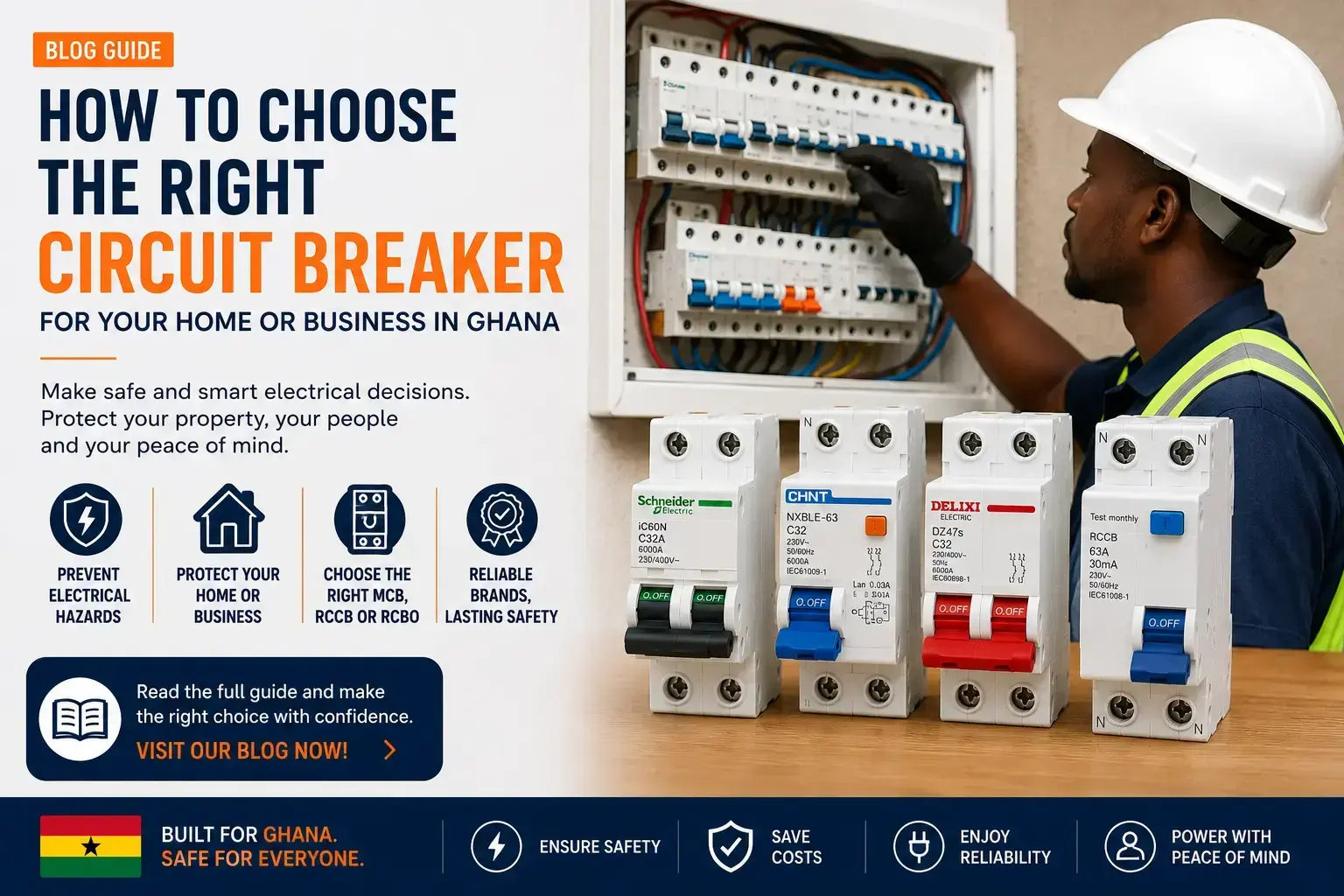
If you are building a new home, upgrading your electrical panel, managing a commercial property, or simply replacing a faulty breaker, choosing the right circuit breaker is critical. But with so many types, sizes, and ratings available, many people are unsure where to start.
This guide explains everything you need to know about selecting the right circuit breaker for your needs in Ghana.
A circuit breaker is an electrical safety device designed to automatically stop the flow of electricity when a fault occurs.
Think of it as a security guard for your electrical system. When it detects a problem such as an overload or short circuit, it disconnects the power to prevent damage and reduce safety risks.
Unlike traditional fuses that must be replaced after they blow, circuit breakers can usually be reset and used again after the fault has been corrected.
Circuit breakers help:
Without the correct circuit breaker, even a small electrical fault can lead to expensive repairs or dangerous situations.
A circuit breaker continuously monitors the amount of current flowing through a circuit.
When the current exceeds safe limits, the breaker automatically trips and interrupts the electrical supply.
This typically happens due to:
An overload occurs when too many devices draw power from the same circuit.
For example:
The breaker trips to prevent overheating.
A short circuit happens when live and neutral wires come into direct contact.
This creates a sudden surge of current that can damage equipment and wiring.
The breaker disconnects power almost instantly.
Ground faults occur when electricity finds an unintended path to the ground.
These faults can increase the risk of electric shock and require immediate protection.
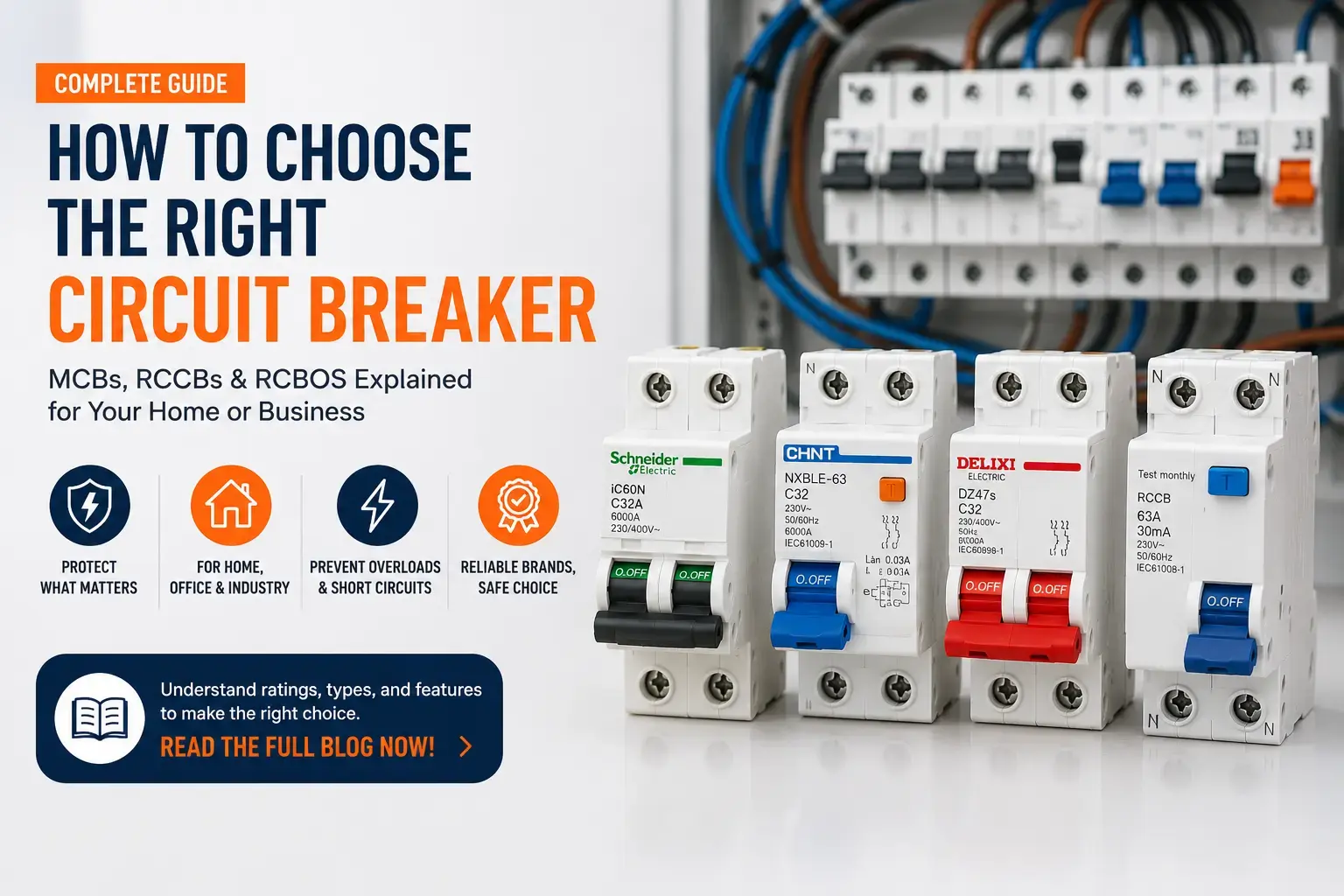
Understanding the different types of circuit breakers helps you choose the right protection for your installation.
MCBs are the most common circuit breakers used in homes and small offices.
They are designed to protect low-current circuits.
MCBs are ideal for most residential applications in Ghana.
MCCBs are designed for higher electrical loads than MCBs.
They are commonly used in commercial and industrial environments.
If you operate a workshop, warehouse, or commercial facility, an MCCB may be the better option.
An RCCB focuses on protecting people from electric shock.
It detects leakage currents and disconnects power when dangerous conditions occur.
An RCBO combines the functions of an MCB and an RCCB into a single device.
It provides protection against:
Many modern installations prefer RCBOs because they offer comprehensive protection in one unit.
Choosing the correct breaker involves more than simply matching the physical size.
Here are the most important factors to consider.
The first step is calculating how much electricity the circuit will carry.
Every appliance and device connected to the circuit consumes power.
Examples include:
The breaker must be able to handle the expected load without nuisance tripping.
A qualified electrician can calculate the total load accurately.
Circuit breakers are rated in amperes (A).
Common ratings include:
The current rating should match the wiring capacity and expected electrical load.
Selecting a breaker with the wrong rating can reduce safety and system performance.
The breaker must match your electrical system's voltage.
In Ghana, most residential installations operate on:
Commercial and industrial installations may use:
Always verify compatibility before purchasing.
Breaking capacity refers to the maximum fault current a breaker can safely interrupt.
It is usually measured in kiloamperes (kA).
Common ratings include:
Higher fault levels require higher breaking capacities.
For commercial and industrial environments, this factor becomes especially important.
Circuit breakers come in different pole configurations.
Used for individual circuits in homes.
Used where both live and neutral conductors must be disconnected.
Common in three-phase commercial installations.
Used in larger industrial systems requiring neutral isolation.
The correct configuration depends on your electrical design.
Circuit breakers have different tripping characteristics.
Trips quickly.
Best for:
Handles moderate startup currents.
Best for:
Handles high startup currents.
Best for:
Choosing the wrong tripping curve can result in unnecessary interruptions.
Ghana's climate can expose electrical systems to:
Choose quality circuit breakers designed for reliable operation under local conditions.
This is particularly important for:
Many electrical problems occur because of poor breaker selection.
Avoid these common mistakes:
A breaker that is too large may fail to protect wiring properly.
This causes frequent tripping and inconvenience.
Always follow equipment and wiring recommendations.
Some electrical panels are designed for specific breaker types.
Improper installation can create serious safety hazards.
When in doubt, consult a qualified electrician.
Circuit breakers do not last forever.
Watch for these warning signs:
Replacing a faulty breaker promptly can prevent larger electrical problems.
A circuit breaker is not a product where cutting corners is worth the risk.
Low-quality breakers may:
Investing in trusted electrical protection devices improves safety, reliability, and long-term performance.
At Prime Nexu Store, customers can find dependable electrical products suitable for residential, commercial, and industrial applications.
When purchasing a circuit breaker, look for:
Buying from a reputable supplier helps ensure your electrical system remains safe and compliant with installation requirements.
Prime Nexu Store offers a growing selection of electrical protection products designed to meet the needs of homeowners, electricians, contractors, and businesses across Ghana.
Choosing the right circuit breaker is one of the most important decisions in any electrical installation. The correct breaker protects your wiring, appliances, equipment, and most importantly, the people who use the system every day.
By understanding load requirements, current ratings, breaker types, breaking capacity, and installation conditions, you can make informed decisions that improve both safety and reliability.
Whether you are wiring a new home, upgrading a commercial facility, or maintaining an industrial operation, selecting the proper circuit breaker is a smart investment that pays off through better protection and long-term performance.